
Rate of Gold Recovery by Size of Particle

Here is a review of various gold recovery machines/methods and the gold particle size they are best suited to recover. Compare Jig, shaker tables, dry washer, sluice box, spirals, bowl concentrators, falcon, Knelson and leaching. The size distribution of the raw material will also determine if classification of the ore is necessary for better recovery. […]
Kimberlite Deposits and Geology Formation of Diamonds
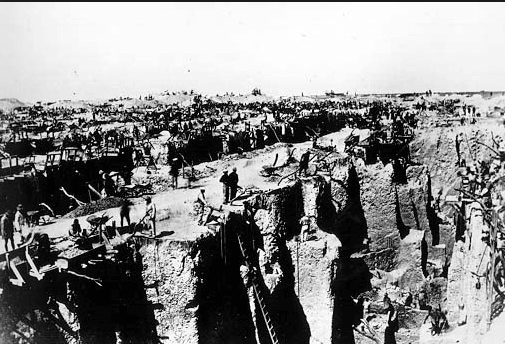
The geology of Diamonds consist of crystalline carbon although a significant proportion of diamonds are derived from placid deposits i.e. hosted in sediments, placid’s are secondary deposits and all diamonds were at one time or another hosted by kimberlite igneous rocks. The name Kimberlite comes from the town of Kimberley which grew up around the […]
Mineralogy of MVT Mississippi Valley Type Deposits
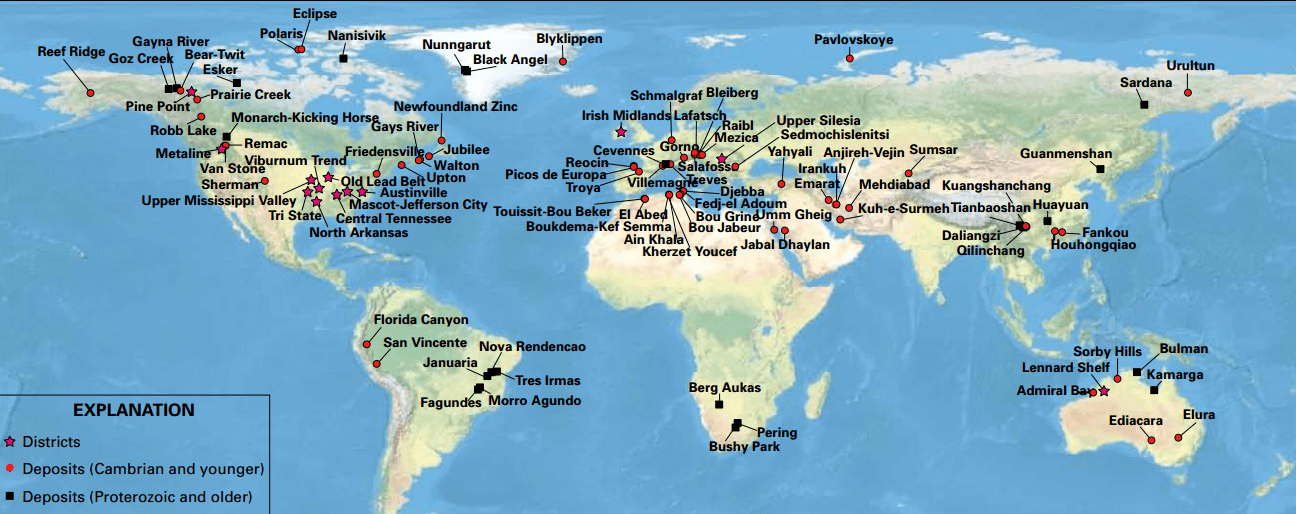
Where are the VMT A Mississippi Valley Type Deposit or commonly called VMT offers some of the simplest, cleanest and “easiest” mineralogy and therefore metallurgy in the world. As shown in the image below, a near perfect liberation of all minerals at 100 microns grind. As seen below, Mississippi Valley Type Deposits liberate very well as coarse […]
Sample Preparation Flowchart
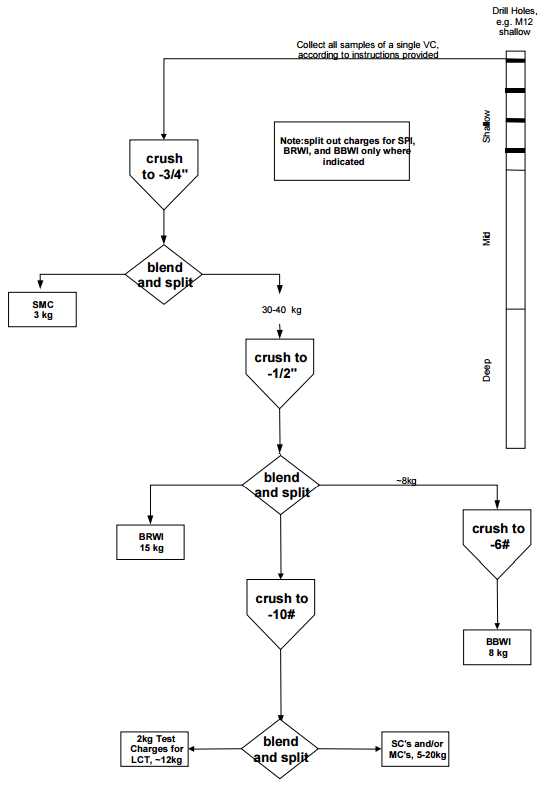
The samples set aside for the Super Composites (SC) were blended to form the four composites used for the initial flowsheet development program. Each SC was crushed to 100% passing 10 mesh and rotary split into 2 kg charges and a reject fraction. A flowchart summarizing the sample preparation procedure is presented here below. Eighteen […]
Carlin Type Gold Deposit
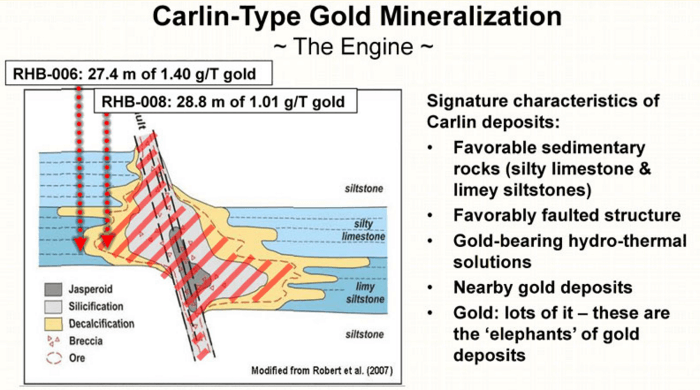
Prospectors frequently talk about being in elephant country, meaning in good hunting grounds for big deposits. Historically Carlin Type Gold Deposit are big elephants but until recently they were largely known to occur only in the limited hunting ground of Northern Nevada that limitation is now beginning to change. How Carlin gold deposits fit into […]
World’s Main Gold/Auriferous Mineral Deposits
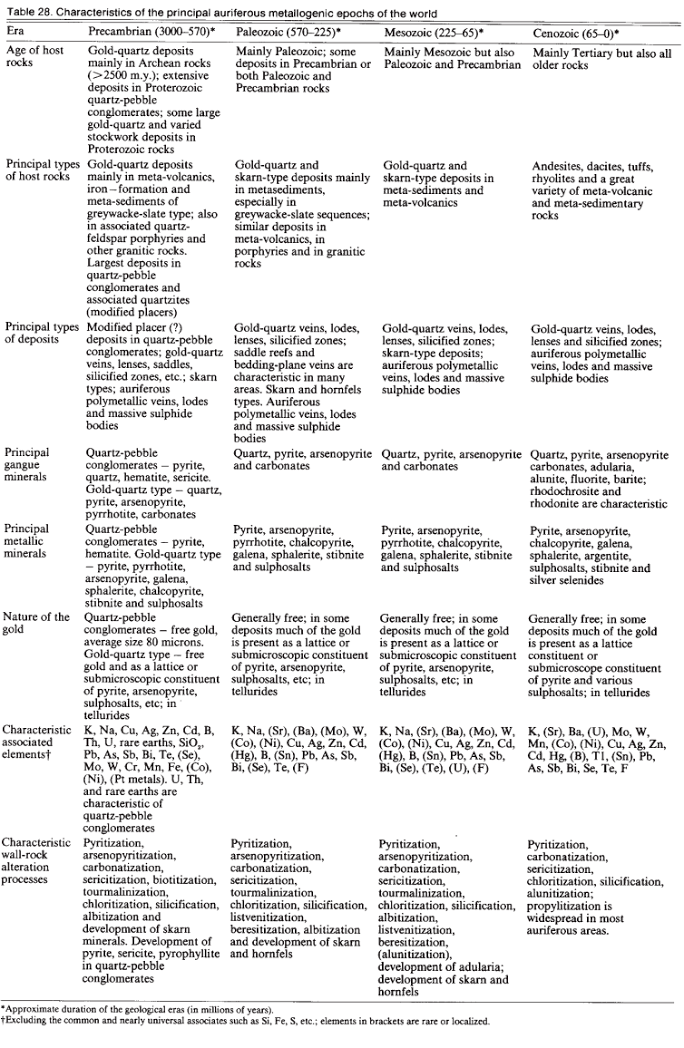
Era Precambrian (3000-570)* Paleozoic (570-225)* Mesozoic (225-65)* Cenozoic (65-0)* Age of host rocks Gold-quartz deposits mainly in Archean rocks (>2500 m.y.); extensive deposits in Proterozoic quartz-pebble conglomerates; some large gold-quartz and varied stockwork deposits in Proterozoic rocks Mainly Paleozoic; some deposits in Precambrian or both Paleozoic and Precambrian rocks Mainly Mesozoic but also Paleozoic and […]
World Gold Deposits Map
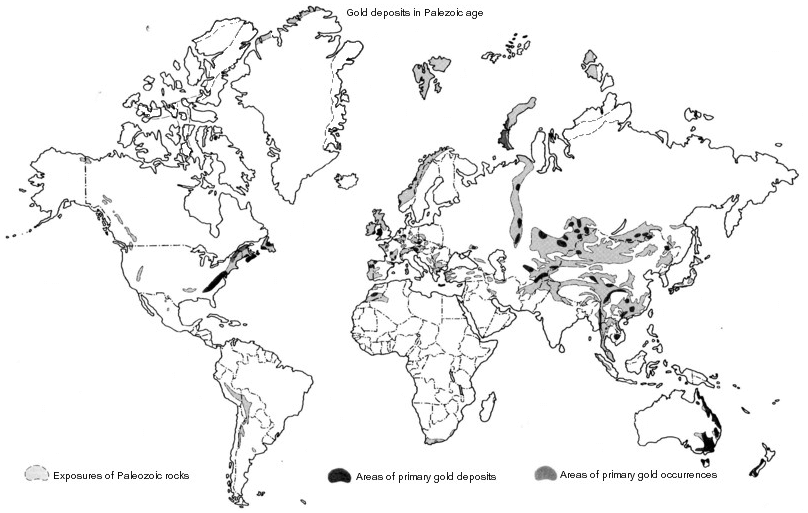
Here are 5 maps of where gold is found in the world while highlights zones where is the most gold found on the planet. https://www.nrcan.gc.ca/earth-sciences/science/geology/gsc/17100
Map Gold Deposits – Canada

Map of Producing Mines in Canada
Where are Vein Mineral Deposits Found
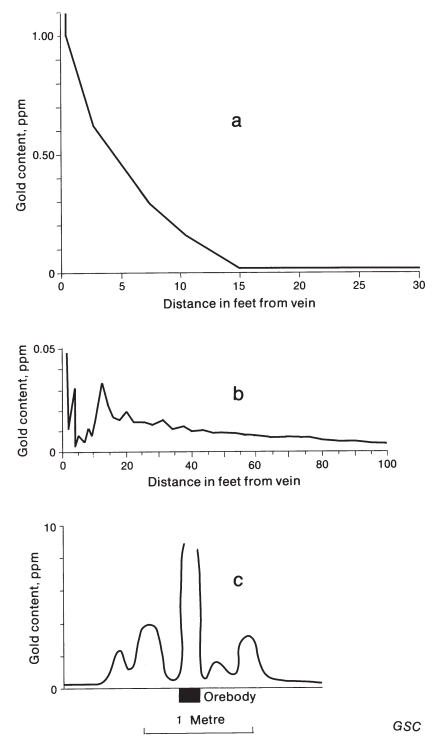
Where or how do vein mineral (gold, copper, nickel, silver, etc etc) are found is be exploring and sampling. As shown here, if you find some showings with increasing concentration, you are getting closer to the vein and maybe the Bonanza!
What Other Minerals are Found With Gold
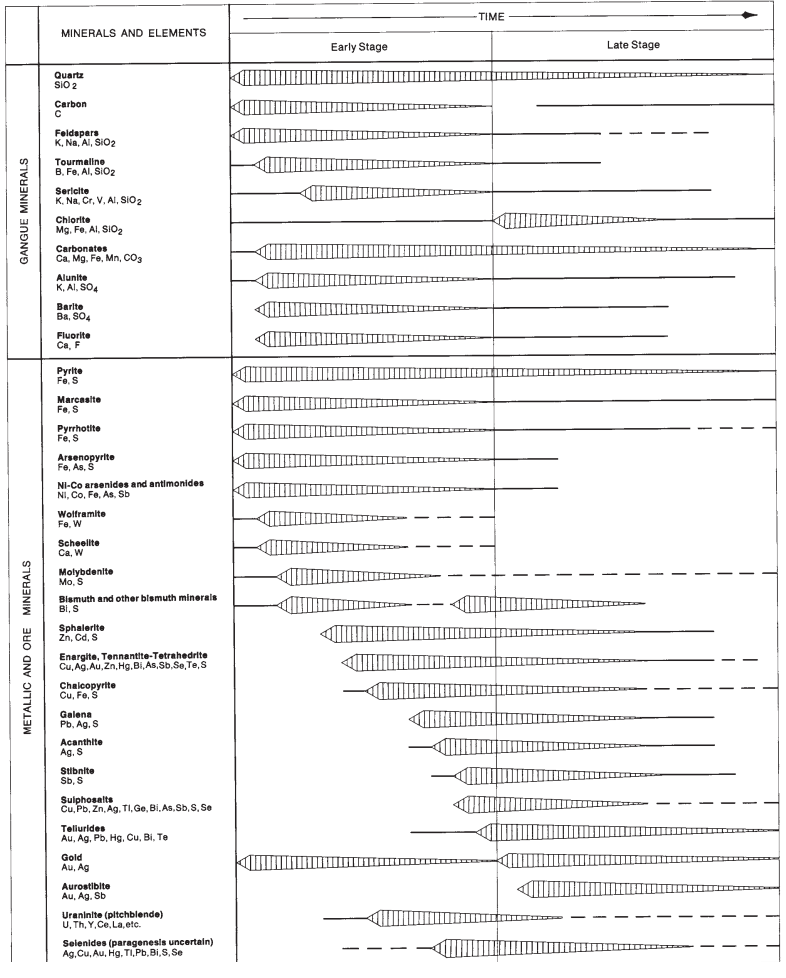
Generalized paragenetic sequence of principal minerals and elements in epigenetic gold deposits. Minerals and elements shown include only those in veins, lodes, etc.; minerals and elements in wall-rock alteration zones are excluded. https://www.nrcan.gc.ca/home