
Ore Feed Size * Work Index Hardness: Crushing & Mill Tonnage
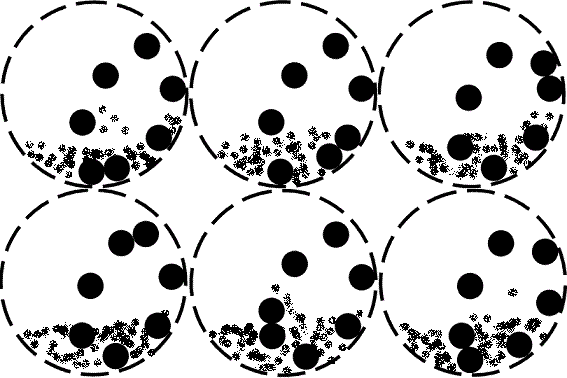
The single most common reason for an increase or drop in the production of fines is the WORK INDEX of the ore. If you remember, the work index of the ore is a method of measuring the degree of hardness. As the ore becomes harder the fracture lines in the rock become cleaner or sharper […]
Feeder Control -Ore Feed Size and Mill Tonnage
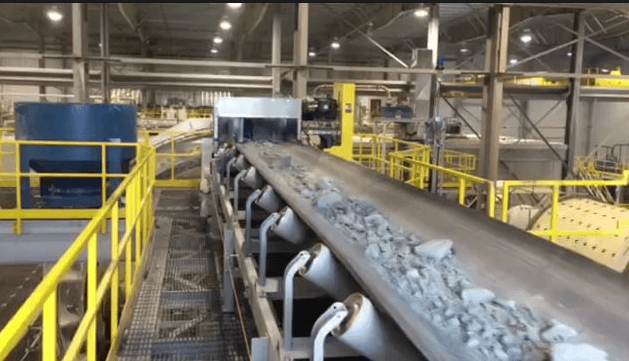
One area of major importance for the identification of impending problems are the feed belts. By visually estimating the PHYSICAL CHARACTERISTICS of the ore it is possible to have advance warning of change in many of the variables. Feed size is the most apparent, if the crush is supposed to be minus 3/8 of an […]
Operating a Grinding Circuit -How to Operate
What I would like to do now is expand upon the grinding theory involved. Bring all of the earlier information together and show you how it relates to the operation of a mill and make you capable of Operating a Grinding Circuit correctly. Then I will explain the differences between Rod mills, Ball mills, SAG […]
Effect of Water & Density on Grinding Mill
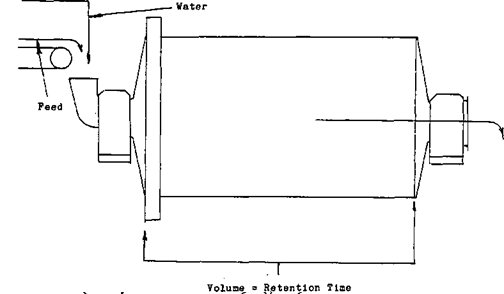
The Time that the ore spends in the grinding mill is called, RETENTION TIME. This is a very important variable, the longer the retention time, the more the ore comes in contact with the rods, the better and finer the grind becomes. To understand this important control it must be remembered that any volume that […]
Grinding Mill Gear Assembly

We will begin with the mill’s bull gear assembly and work towards the motor, The BULL GEAR, sometimes called the RING GEAR is designed to turn the mill transforming the energy of the motor into motion for the mill. By mill we refer to Ball Mills, Rod Mills and SAG Mills. Anything gear and pinion […]
Trunnion Bearing Assembly Ball Mill & Rod Mill

The first part of the mill that we will look at is the TRUNNION BEARING. This is a HYDROSTATIC BEARING which is a slow moving bearing that carries a heavy load. Usually it is constructed from Babbitt’s metal. If you happen to remember the introduction to this course Issac Babbitt was the man who devised the […]
Grind to Liberate Mineral Grains

The next piece of information that is of value to the operator is to know the hardness of the ore. The WORK INDEX, as the hardness is referred to, is calculated on the amount of electrical energy that is required to grind the ore to a predetermined size. Said in another way, it is the […]
Rods or Balls

Mill operators will not get to design too many mills, but this doesn’t mean that the information that has been compiled isn’t of interest to the operator. Knowing the ore body shape, size, and content will give the operator prior knowledge of operating conditions to be expected. It is also beneficial to know how this […]
Simple Grinding Circuits & Flowsheets
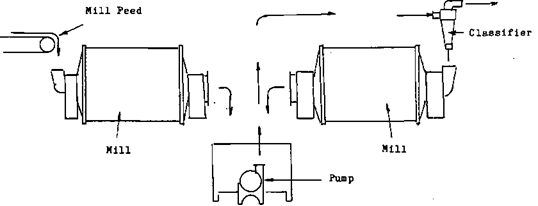
To start the discussion on grinding circuits I would like to begin by showing you some simple Flowsheet SCHEMATICS of some sample circuits, but before I do there is one thing that I must explain for the schematics to make sense. When the ore is put into the first piece of equipment for grinding, water […]
Polyurethane Screen Panels
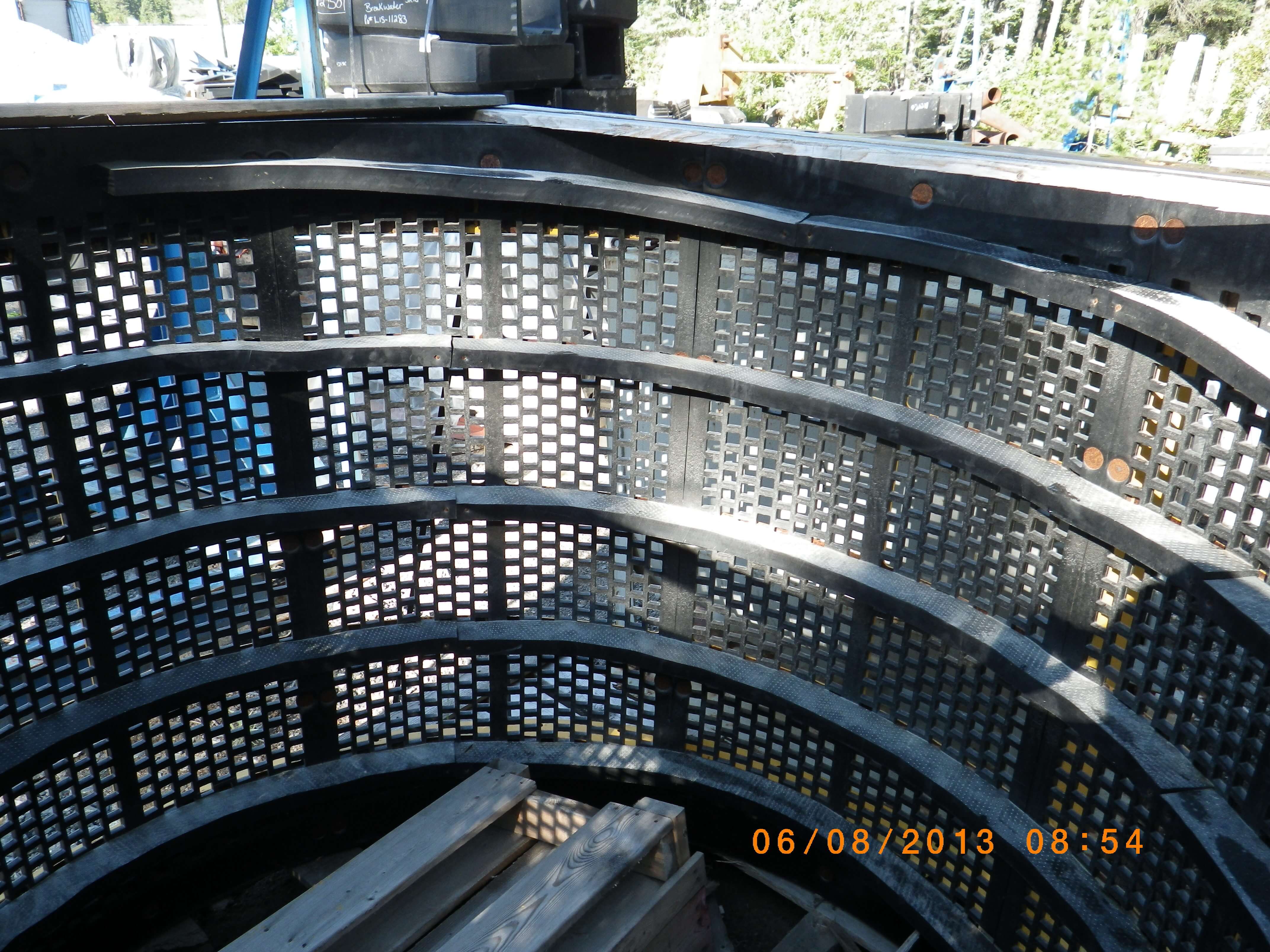
These Polyurethane Screen Panels are often installed on SAG discharge trommel screens or AG vibrating screens and even crusher circuits. Polyurethane Screen Panels are best when made of low “durometer” Polyurethane to allow a “bouncing” effect for the rocks and reduces wear.