Flocculation Test Procedure
A Flocculation Test Procedure is used to determine how much Flocculants need be added to solids in suspension (slurry or pulp) to cause the individual

A Flocculation Test Procedure is used to determine how much Flocculants need be added to solids in suspension (slurry or pulp) to cause the individual
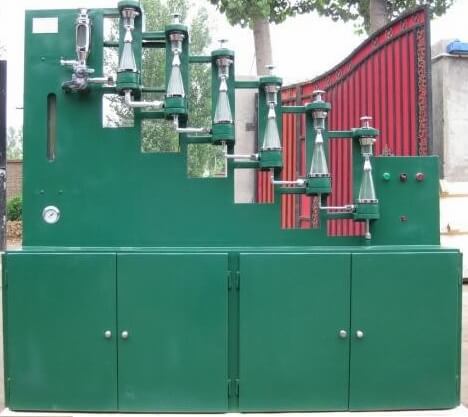
A cyclosizer, in principle, is an “old sizing machine” allowing size analysis of sub-sieve size (-38 micron). One of the most widely used methods of sub-sieve sizing
This titration method lets you determine what your lead (Pb) assay contain is: Volume of the solution before boiling is 65 cc. Water and 10
You can perform a Zinc determination using this titration method with methyl orange as your indicator. To 0.5 grams of sample add 10 cc’s HCl and boil
A simple titration using iodide was turned into a method for assaying copper and obtain reliable analysis. To .5 grams of sample in a 250
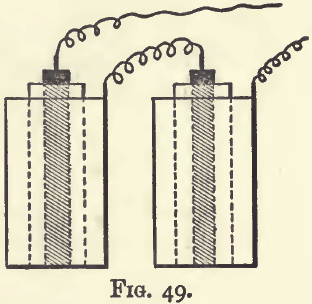
If you need a method for the Electrolytic Determination (Assay) of Copper, use this procedure: Weigh out sample. In the case on concentrate use .5 grams,
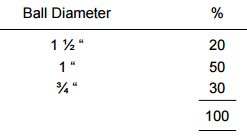
The test is designed to give a reasonable indication of the grinding work index of an ore material relative to one or more known standards. It
1 gram of sample is decomposed with longer appear 10 cc’s of H2SO4 is added. This solution is evaporated to dryness and allowed to cool.
To obtain a gravimetric determination of nickel using dimethylglyoxime: Weigh and measure a sample so that not over 100 mg. Of nickel present. Add 10
Assay copper using fluoride and Sodium Thiosulphate (Hypo) to titrate with, you’ll need: 8 cc’s of nitric acid are placed on given weight of sample