
Adjust Weir Gate Level on Flotation Cell/Bank
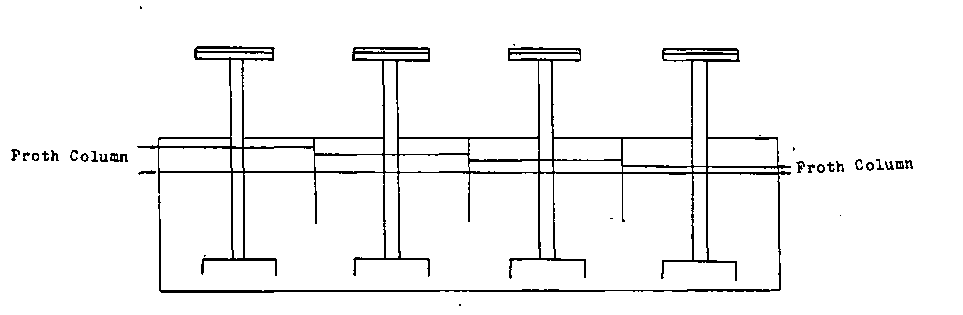
If we examine the froth column of this bank of cells you will notice that the column becomes SHALLOWER from cell to cell. This is to capture the particles that are lightly mineralized, and is floating very low in the froth. The last cell will have the shallowest froth column, in fact in many cases, the […]
Flotation Cell/Bank Sand Port
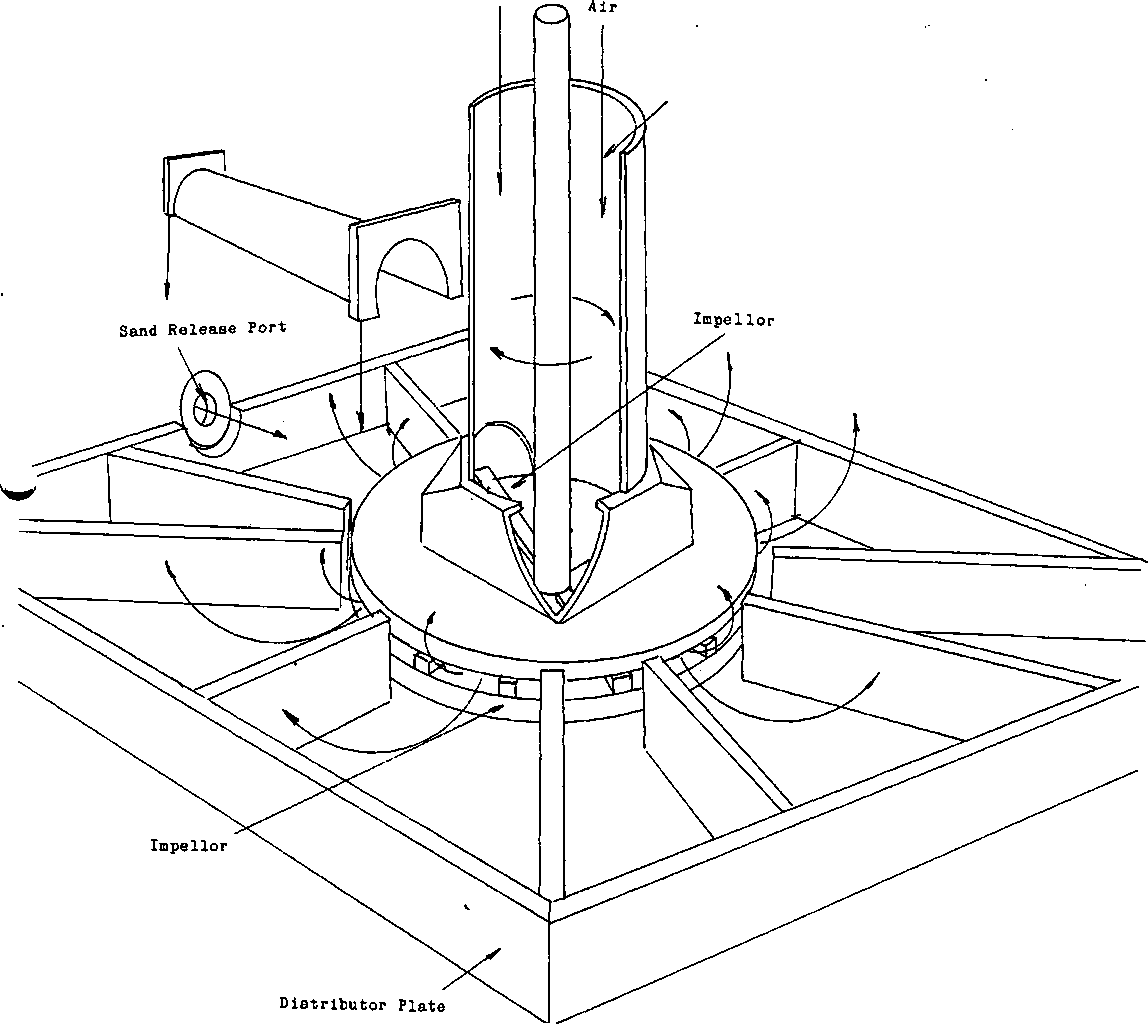
In every cell there is the need to allow the SANDS to escape. The sands are the particles that didn’t become ground fine enough. NO matter how efficient the classifier is it will not be one hundred percent effective. There will always be aware factor, where in the circuit that the cell is, and operator […]
Adjusting Pulp and Air Levels to get good Froth Movement
Any time that you have an overloaded froth condition the OVERFLOW that is going over the side of the cell will slow down as the froth column begins to collapse under the weight of the mineral. The first corrective reaction is to raise the pulp level or add air to the cells to quickly increase […]
Optimum Flotation Reagent Addition Rate (Dosage)
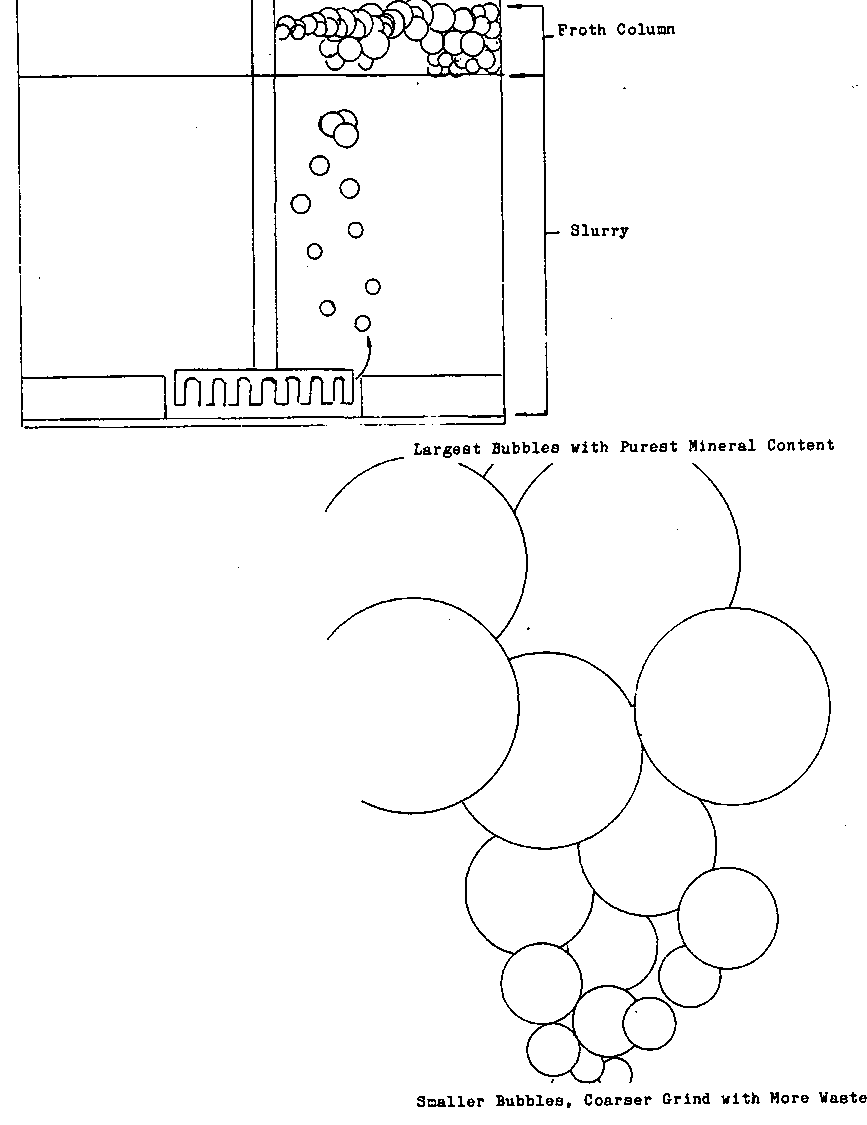
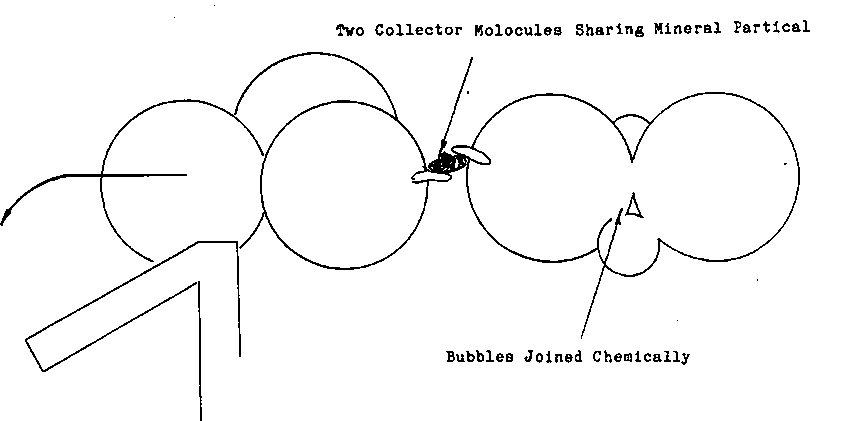
By now you are aware of the importance of the effect that the reagents have on single bubbles. Now we will begin to show you how the bubbles effect each other. In the cell the air, the reagents, the mineral and the impellor agitation all combine to create what is known as a FROTH COLUMN. […]
Flotation Frother Dosage
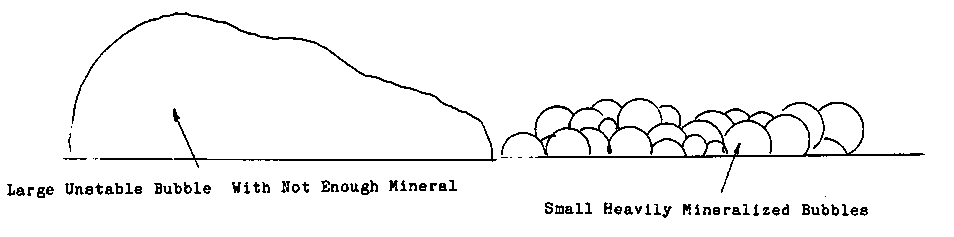
Now for the FROTHER, if there is TOO LITTLE frother the bubbles will become small and the speed of the overflow will be slow. If this condition continues the speed will become slower and slower as the collector overloads the bubble. Soon the froth won’t move at all. The colour will remain correct. On the […]
Flotation Collector Dosage – Collection of Froth
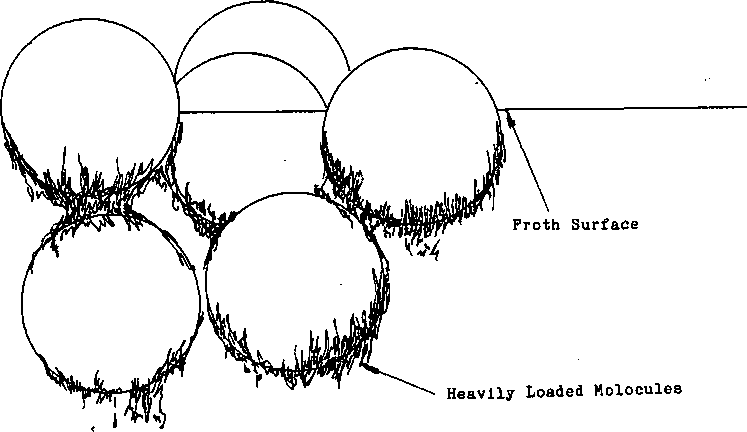
What happens when there is too much flotation collector, how do you know and how can to estimate? The bubble will react as if there is too little depressant. Froth bubbles will get smaller and closer together, but the unlike the depressant it won’t cause the mineral to fall off of the bubble due to overloading. […]
Flotation Depressants
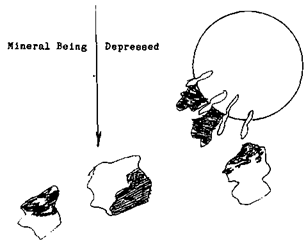
First let’s change the amount of the Flotation Depressants used. The valuable mineral that isn’t liberated from the unwanted mineral will begin to be depressed along with the waste. For the floatation operator, the change that will become most apparent is, that the color of the froth will begin to reflect more of the wanted mineral’s […]
Chemical Reaction of Copper Minerals and Cyanide

In discussing the Reaction Products from Copper Minerals and Cyanide you will find that when an excess of copper mineral is acted upon by cyanide solution, dissolution of copper continues at a decreasing rate until equilibrium is established and no more copper goes into solution. The rate will vary with the particular mineral used as […]
MgO in Zinc Sphalerite Concentrate Contamination
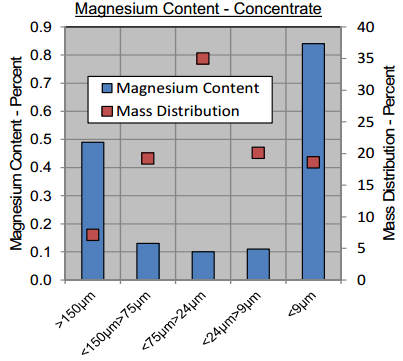
Here is how Mg is often present as Mg (magnesium oxide) in a Zinc Sphalerite Concentrate produced by froth flotation. According to typical mineralogy data obtained from Zinc concentrate (P80=90um), the MgO is located in 2 opposite regions. This concentrate contained 0.3% Mg total. Unless you want to give away your concentrate to Doe Run, you need […]
Froth Flotation Entrainment -Types and Forms
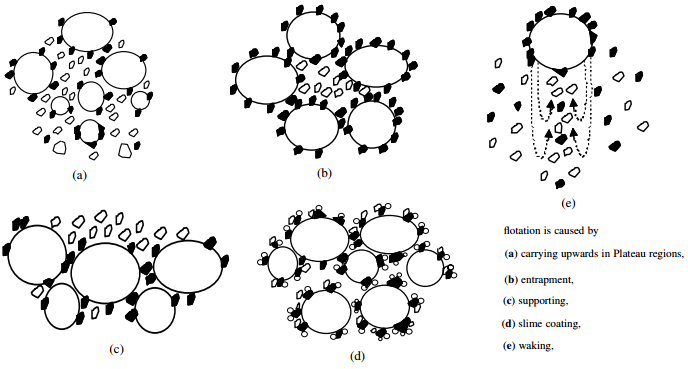
Commonly, none sulphide particles like MgO, being an oxide (or silica gangue), does not respond to flotation. For example, when MgO is found in a sulfide flotation concentrate it is either for it is associated/locked with another sulfide (pyrite/sphalerite) which has and did respond to flotation, or it has been entrained into the froth along […]