
Operating and Troubleshooting a Grinding Circuit
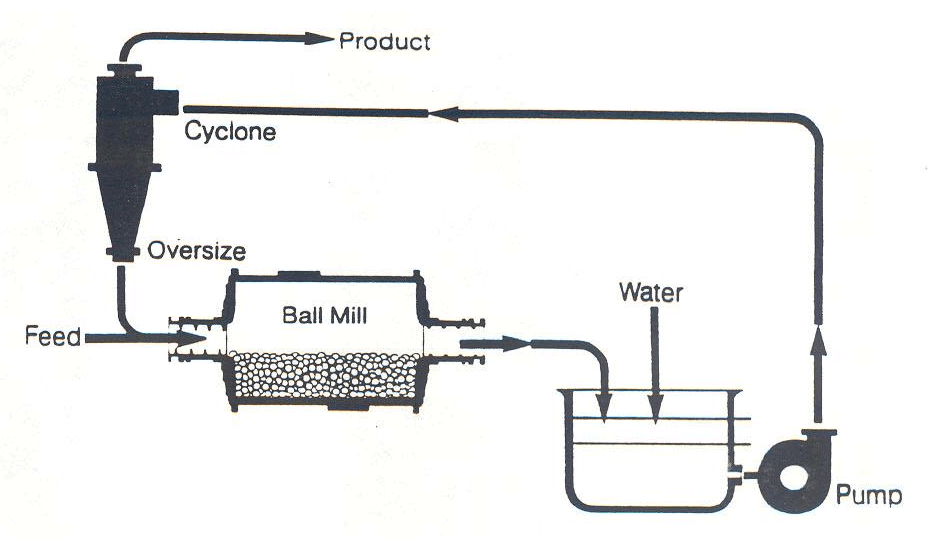
In the operation of a grinding circuit you are managing several pieces of equipment as a single unit. If you make a change in the ore in the fine ore bin, that change will be reflected through the entire grinding process and beyond into the rest of the concentration system. The first thing that an […]
Hydrocyclone Operation

The hydrocyclone operation consist of having the ore slurry pumped into its feed inlet, the ore is then separated by size with the fine material coming out of what is referred to as the “OVERFLOW” via a Vortex Finder. The mineral that still requires grinding is named the “UNDERFLOW” via the Apex Finder. These two […]
Operating a Grinding Circuit -Understand Your Flowsheet
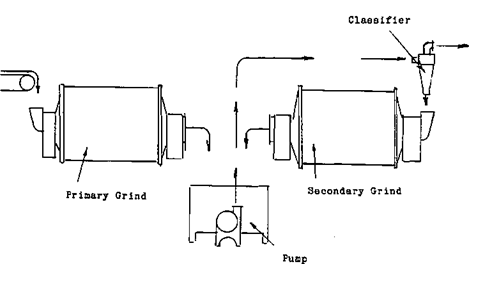
The next thing that I would like to discuss is the operation of the circuit as a unit. The CIRCUIT is the common name obtained from the path that the ore takes as it progresses through any particular process. In this case grinding. I won’t deal with start-up procedure as it will change from mine […]
Grinding Mill Liners

There are basically two groups of Grinding Mill Liners. Ones with a HIGH PROFILE and those with a LOW PROFILE. The high profile liner is designed to give the media the higher lift. This type will be used in mills that are designed for primary grinding and as a result require the impact of the […]
Tumbling Mill Critical Speed
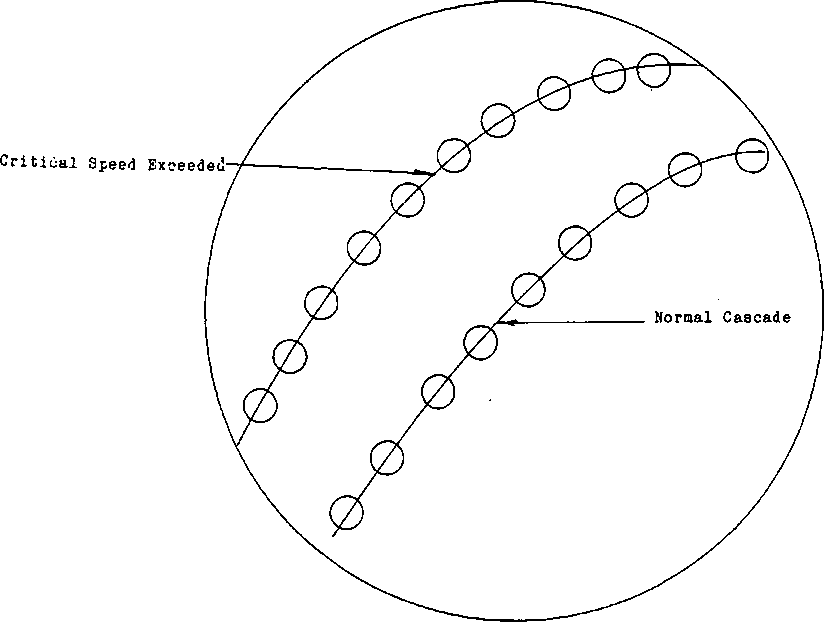
I am going to discuss only one more variable that has to do with grinding media and that is CRITICAL SPEED of Tumbling Mills. The throughput of a mill may be increased by increasing the revolutions per minute of the mill. This will give the ore the necessary increase of available media surface needed to accomplish the […]
AG Autogenous Grinding
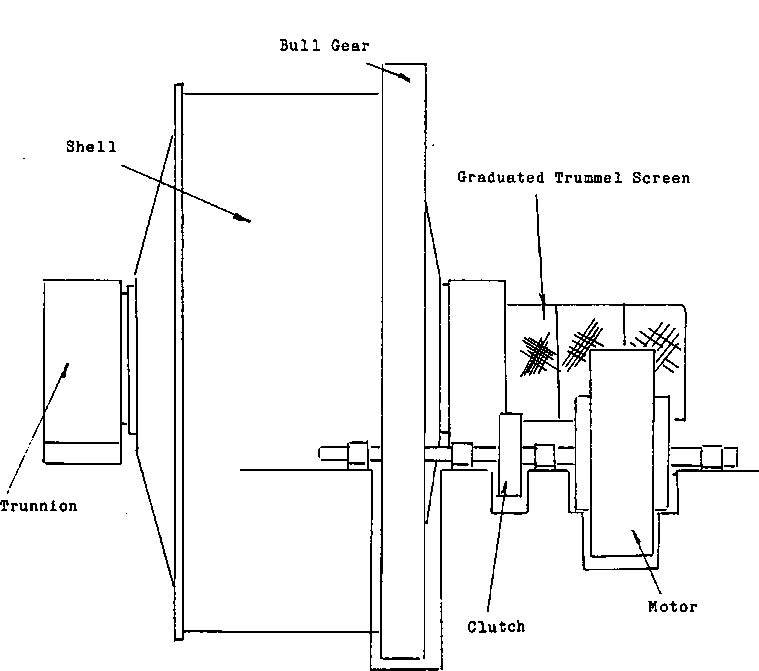
The third type of mill that I mentioned was an AUTOGENOUS MILL, this type of mill uses a completely different type of grinding media; the rock itself In conventional milling, the ore is crushed to, plus or minus, 3/8 of an inch, before it is put into a mill for grinding. In a autogenous mill […]
Rod Mill Liners
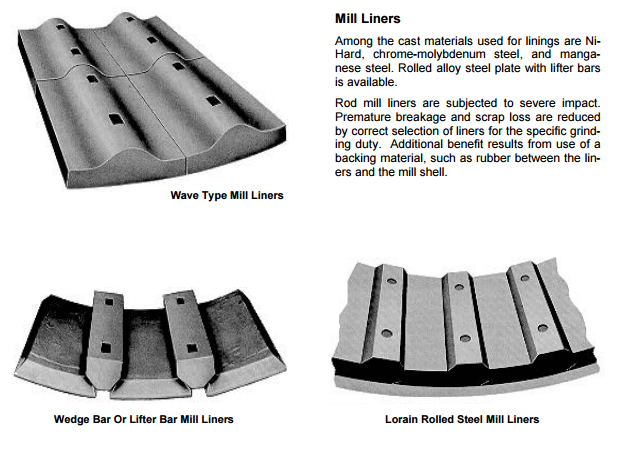
Among the cast materials used for linings are Ni-Hard. chrome-molybdenum steel, and manganese steel. Rolled alloy steel plate with lifter bars is available Rod mill liners are subjected to severe impact. Premature breakage and scrap loss are reduced by correct selection of liners for the specific gnnd-mg duty. Additional benefit results from use of a backing […]
Ball & Rod Mill Density – How Water Impacts Grinding
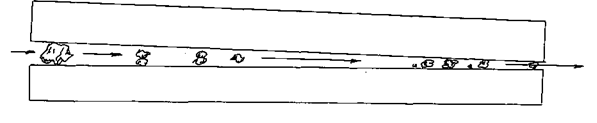
Density, if you recall is the ratio of ore to water and is measured as a percent of solids in the water. It will control the grind in two ways. It affects retention time and helps distribute the ore through-the mill so each piece of rock will come in contact with the surface of the […]
Grind Calibration Curve -Laboratory Test
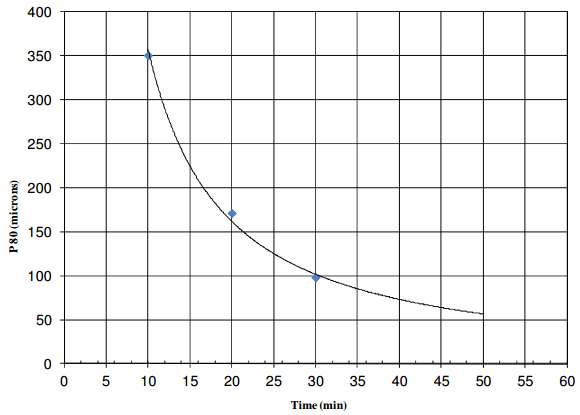
Before doing multiple laboratory flotation bench tests in which you need P80 grind controlled or predicted, you need to build a Grind Calibration curve following this short procedure. You will consistently add sufficient water to the mill to achieve a pulp density of 67% solids (Example: 1 kg solids + 0.5 kg water or 2 kg […]
Molybdenum Grind Size & Liberation VS Collector Dosage for Recovery by Flotation
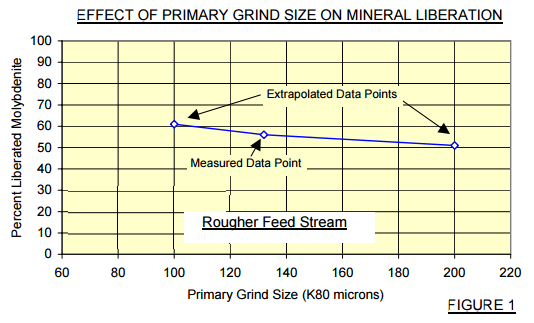
In an effort to evaluate the metallurgical results of an operating plant, 3 process stream samples (red points) provided were subjected to detailed modal analysis using protocols established for mineralogically similar ores. This method of analysis provides quantitative estimates of the mineral composition and of the mineral fragmentation characteristics. This data can then be used to […]