Chromic Acid Solution Electrolytic Regeneration
Etching solutions containing hexavalent chromium ions (e.g., chromic acid) are used in brass finishing, printed circuit board etching, preparation of plastic for plating, anodizing, and

Etching solutions containing hexavalent chromium ions (e.g., chromic acid) are used in brass finishing, printed circuit board etching, preparation of plastic for plating, anodizing, and
Dielectrophoresis, or dielectric separation, can be defined as the separation of particles according to their dielectric properties. Directly related to the dielectric properties of a
What if the shaft were much larger, say, 300 m in diameter, or 3000 m, is the above approach to aquifer depressurization still valid? Is
Continuously separate mixture of non-magnetic materials (such as scrap, precious metals, or certain ores) at a reasonable cost. Nonmagnetic materials of different densities are rapidly
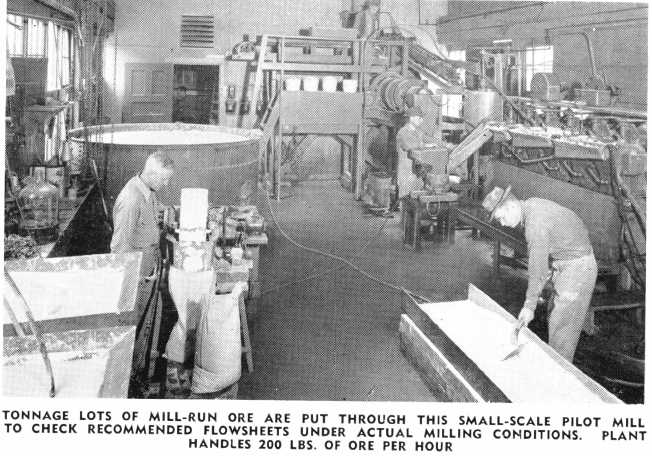
The Metallurgical pilot concentration plant is completely equipped with gravity and flotation units sufficient to provide for practically any flowsheet employing these methods of concentration. All
We used the original flowsheet for two and a half years and made concentrates containing 16%-18% insol. Then we were asked to reduce the insol
As part of its mission to advance minerals technology, the Federal Bureau of Mines has conducted investigations to determine the feasibility of producing subsieve-size material

The study and use of ferrocyanides was initiated with the discovery of the pigment “Prussian Blue” by Diesbach in 1704. Thus, they are among the
Arsenic is produced in the United States as a byproduct from base metal ores. Although this production supplies only about one-half of the national demand,
One goal of the U.S. Bureau of Mines metallurgy research program is to reduce the objectionable impact of mineral-processing operations upon the environment to the