
Laboratory Flotation Equipment & Testing
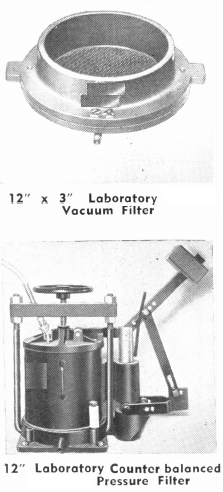
The apparatus listed in the following pages comprises the equipment necessary for complete and thorough testing of flotation processes. Some of it can be omitted where the problems to be studied are of a special character. It is urged, however, that such omission be of the actual flotation machines themselves rather than in the apparatus listed for preliminary […]
Froth Flotation Handbook
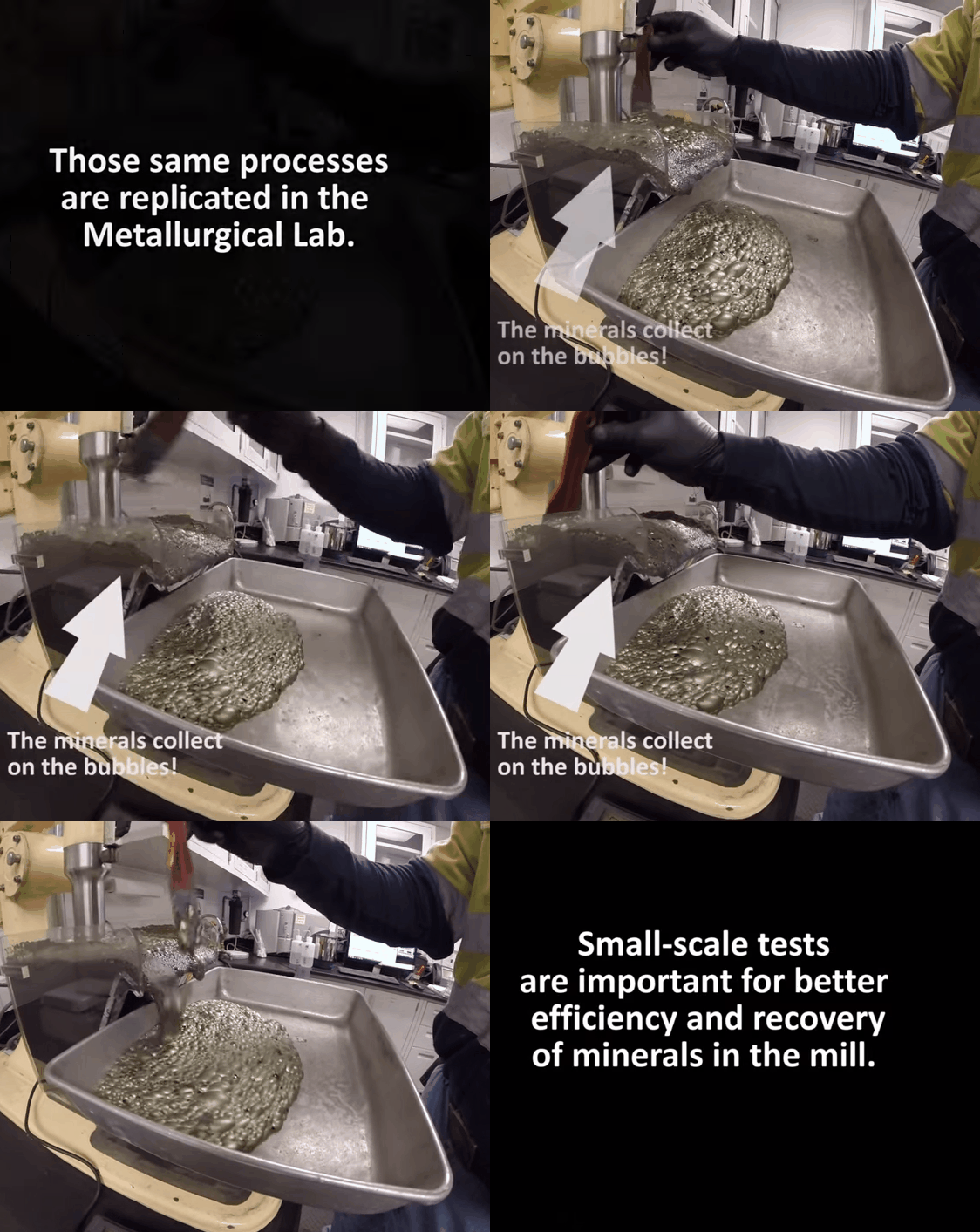
What is Flotation Flotation, as the term is applied to ore concentration, means the separation of one of the constituents of an ore from the remainder by causing it to float at or above the surface of a pulp consisting of the finely pulverized ore and water. Minerals that float Minerals that float have a […]
Explaining the Process of Froth Flotation
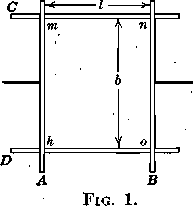
The flotation process for the concentration of ores is a method by means of which one or more of the minerals in the ore (usually the valuable ones) are picked up by means of a liquid film and floated at the surface of a mass of fluid pulp. Here they are separated from the other […]
Remove Arsenopyrite from Galena
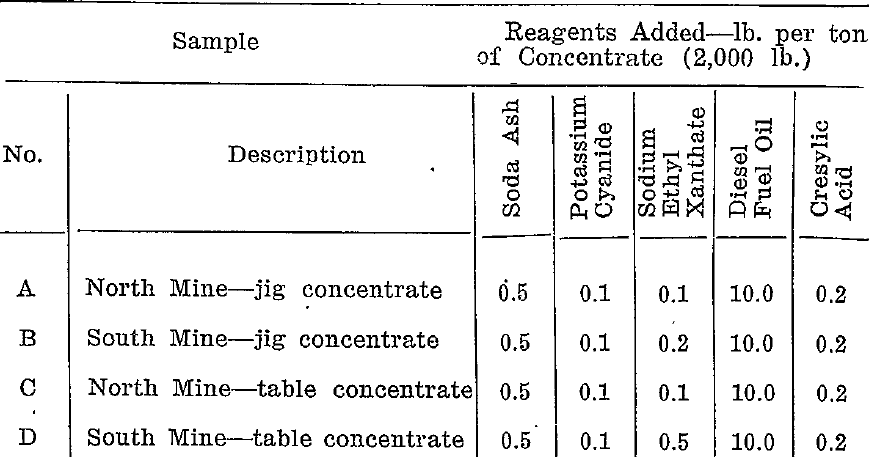
This paper deals with the application of table flotation to two unusual mineral dressing problems. Both problems involved the removal of interfering minerals at sizes too coarse for normal froth flotation. The first problem was the removal of arsenical minerals from Broken Hill gravity concentrates without further size reduction. Table flotation without grinding of the […]
A Glossary of Flotation
Absorb. To drink in, suck up, like a sponge. Adsorb. To condense and hold a gas on the surface of a solid, particularly metals. From L. ad, to, and sorbeo, suck in. Agitation is the act or state of being shaken, stirred, or moved with violence. From L. agitatus, agito, the frequent of ago, to […]
Froth Science
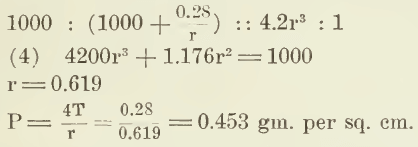
The little book on ‘Surface Tension and Surface Energy’ by Willows & Hatschek shows how the elastic film analogy in the study of froth will get one into no end of trouble if not handled with care. It is the characteristic of analogies to break down when pressed too far, though they are useful up […]
How Froth Flotation was Discovered and Developed
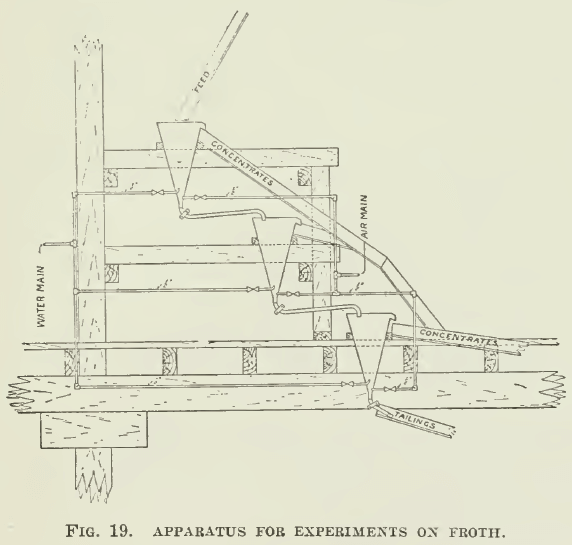
While concentrating the galena in the lead ore produced from the Central mine, a valuable by-product was obtained in the form of slime assaying 18% lead, 20% zinc, and 16 oz. silver per ton. This came from an ore in which quartz and rhodonite were the chief gangue-minerals. In the course of ordinary operations, it […]
Base Metal Ore Processing Plant & Equipment (Copper & Lead+)
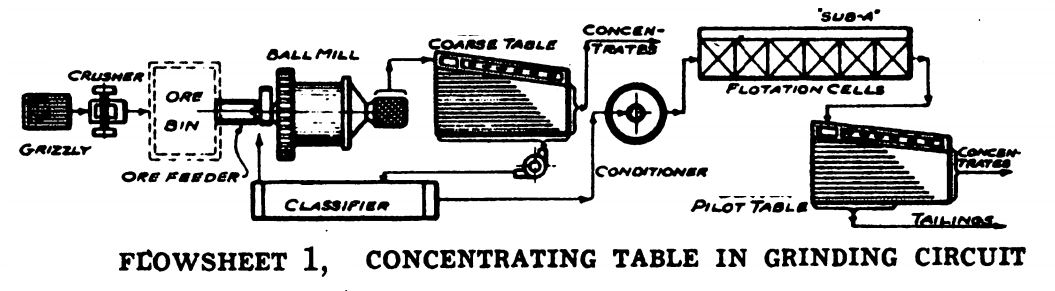
These 5 following estimates on flotation mills cover standard practice as used on base metal and non-metallic ores where the majority of values are recoverable by flotation, and where there is sufficient freed mineral in the ball mill discharge to warrant recovery by means of process Equipment like either a Unit Flash Flotation Cell, a […]
Cyanide Processing Equipment and Plant Options

The Jig, placed between the ball mill and classifier, is one of the most valuable and affordable improvements in cyanidation in recent years and was developed by the metallurgical engineering and Mining Equipment Companies. This Mineral Jig has the marked advantage of removing a large portion of the metallic values without excessive dilution, and water […]
Gravity Recovery or Flotation ahead of Gold Cyanidation

Process Flowsheet NO. CY-3 is shown one of the outstanding improvements made in cyanidation whereby the coarse metallic minerals are removed from the grinding circuit by means of the Mineral Jig. The hutch product from this jig is amalgamated with a Amalgamator or Clean-Up Pan and thus the coarse mineral values, such as metallic gold, are […]