
Copper Lead Zinc Metallurgy
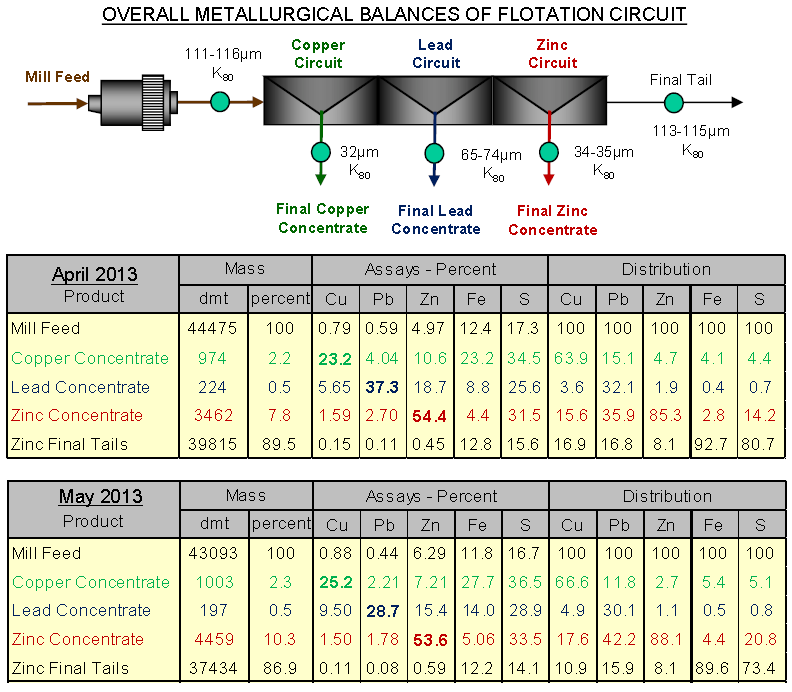
Monthly composites of mill feed, copper concentrate, lead concentrate, zinc concentrate and final tailing were sent for detailed mineralogical/metallurgical analysis. These samples were analyzed and also compared to previous similar work done. The samples represented the following flowsheet and monthly balance: Mineral Speciation: Although Chalcopyrite is still the main form of copper in all samples; […]
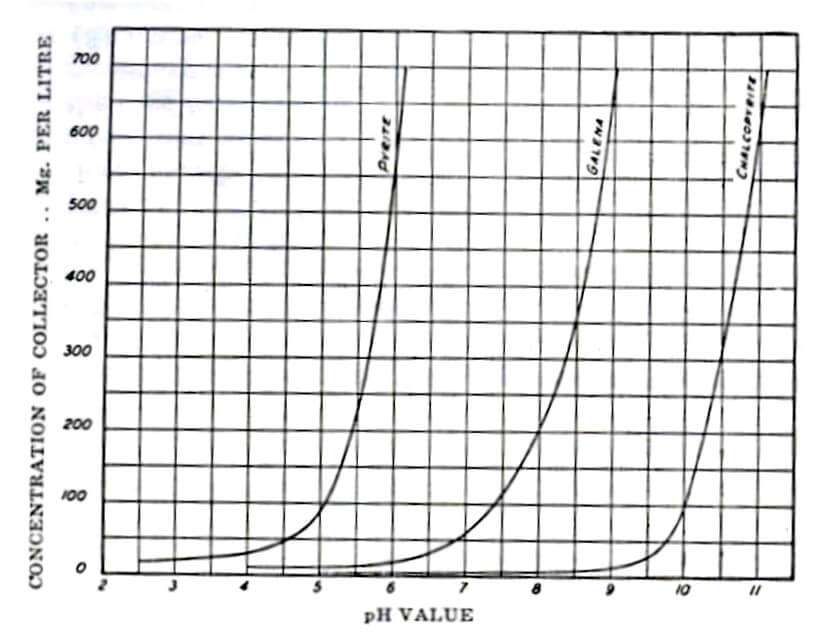
Flotation pH vs Collector on Pyrite/Galena/Chalcopyrite
Arsenic in Copper Concentrate
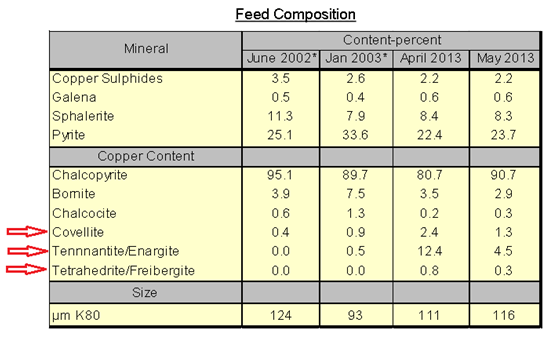
In a certain case study of “high” Arsenic in Copper Concentrate (almost 0.5% As) produced by flotation, and where the Cu Conc is mostly chalcopyrite and therefore the main form of copper; the content of secondary copper minerals was variable. Tennantite/Enargite/Freibergite, a copper-arsenic sulphide mineral, as well as covellite, was present in significantly higher amounts today. […]
Effect of Pre-Aeration and Oxygen on Gold Cyanidation

In your process development you may sometime want to test and see what effect (for your particular ore sample) would the use of oxygenation and pre-aeration have on silver and gold kinetics leach rates and recoveries. Some situations show improved precious metal recoveries, others show an impact of the leach agent’s consumption rate. Here, a […]
Effect of Regrind “Finer Grind” Gold Recovery
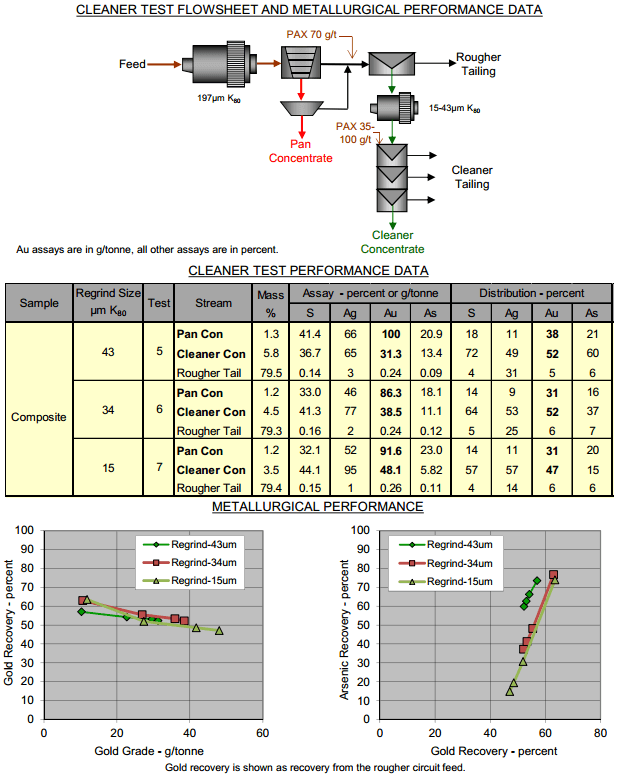
Regrinding a flotation concentrate (commonly the rougher or scavenger conc) can often produce gains in final concentrate grades and overall metal recoveries. What is also possible and not unfrequent that all you get is a better concentrate grade. If the valuable metal (in this case Au) is locked with other easy to float sulfides and were […]
Selective Flotation
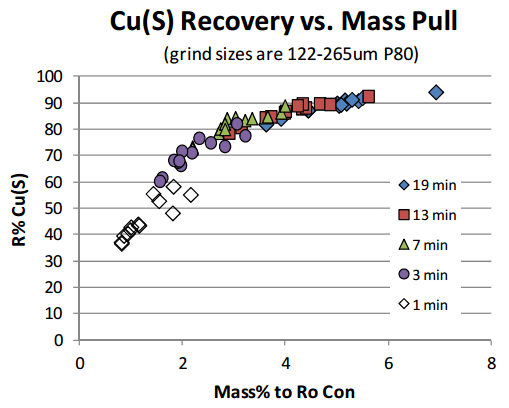
Who would think that Selective Flotation of copper, gold, zinc or any metal would required that one must be able to feel pain and recognized and/or admit when it hurts. Flotation mass-pull is a process that is often misunderstood; a learner’s mistake made by non-operating types. You do not need to pump anything in the […]
Effect of Clay on Flotation Recovery

Here is a classic relationship displaying how clays can affect/impact flotation recovery, copper rougher-scavenger recovery in the case.
Froth Crowder
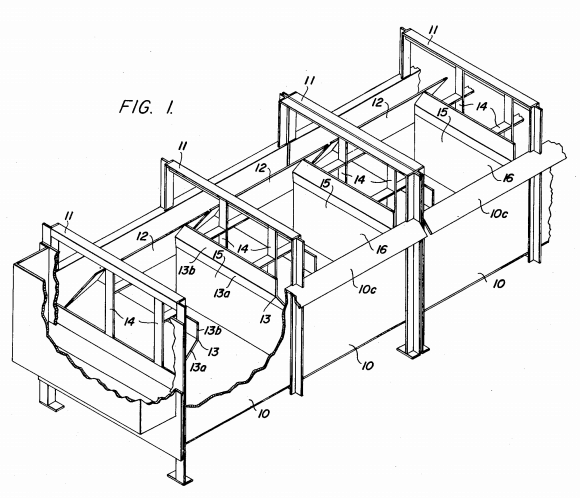
The concept of froth crowders and was developed in the early 1950s. The need for crowding froth out of a flotation cell grew along with the size of flotation machines and their cells. The 1st froth crowder device was patented in 1956 (Fig 1 and Fig 2). What I call the crowder plate is Piece/Item # […]
Sub-A Flotation Cells
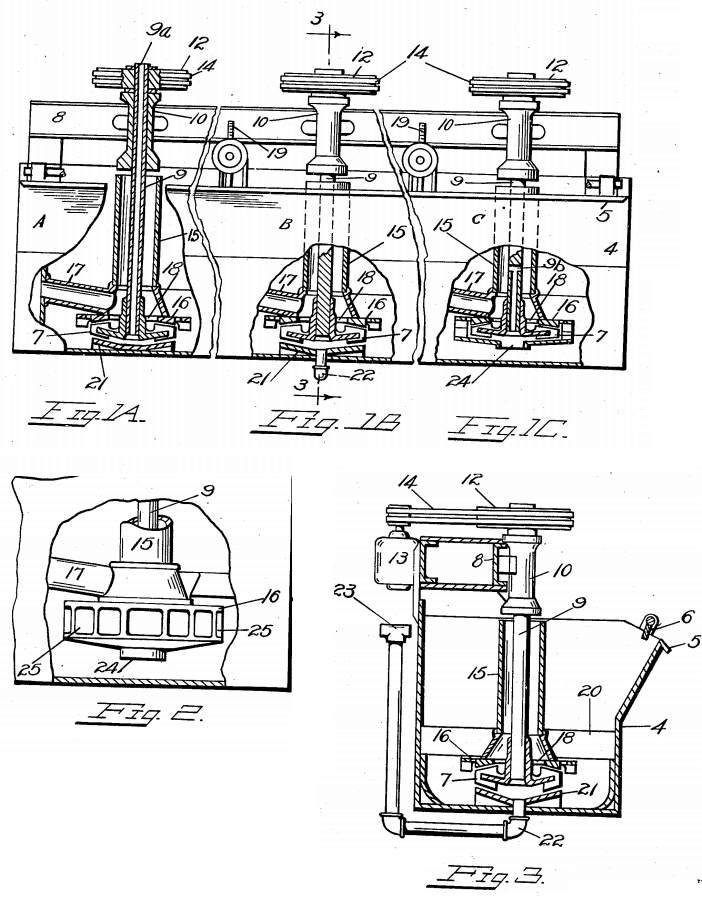
The Sub-A Flotation cells technology has been around for a long time since the Denver Equipment Company first developed it in 1968 after inventing the flotation machine of 1940 and changed the mineral processing industry. The SUB-A float machines used in the mineral, chemical, environmental, and industrial applications requiring the efficient dispersion of fine air or gas bubbles in slurries or […]
Lime Slaking Equipment
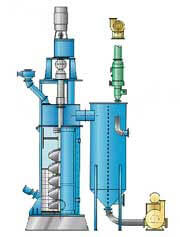
A lime slaking and addition system can consists of two systems to control the pH in the rougher and cleaner flotation circuits. A pebble lime silo will dose dry lime to the SAG mill feed belt; a hydrated lime make down system will provide slurry lime to multiple addition points in the flotation circuit. Other lime […]